
DRINK
Money You Can Drink
20 AUG 2026
Section Styles full-width
Section Styles full-width
WORDS
Michel Lu
SHARE
[social-icons]
For a thousand years tea was not a beverage but a currency, and the instrument by which one empire bought the cavalry it could not breed. The drinking came later.
The bricks were scored across the face, like a bar of chocolate, so that a piece could be broken off to make change. That is the detail worth holding on to. Compressed tea, pressed into slabs and stamped, circulated as money across Tibet, Mongolia, Siberia and Central Asia for centuries. Not valuable in the loose sense that people wanted it. Money. Wages were paid in it. Provisions were bought with it. The Russian government stamped bricks for circulation in Siberia and tax collectors accepted them. Western travellers reaching remote parts of Mongolia and Tibet in the early twentieth century reported that gold and silver were of no use to them and tea was the only thing anyone would take. In Siberia the practice survived until the Second World War.
It was a better currency than silver in one specific respect. If the monetary system failed, you could drink it. In a famine you could eat it. Nomadic households in high, cold places treated a brick as simultaneously a store of value, a medicine and a vegetable, which is a combination no coin has ever managed.
“A nineteenth-century French missionary in Tibet recorded prices quoted in bricks and packets. A horse cost twenty packets.”
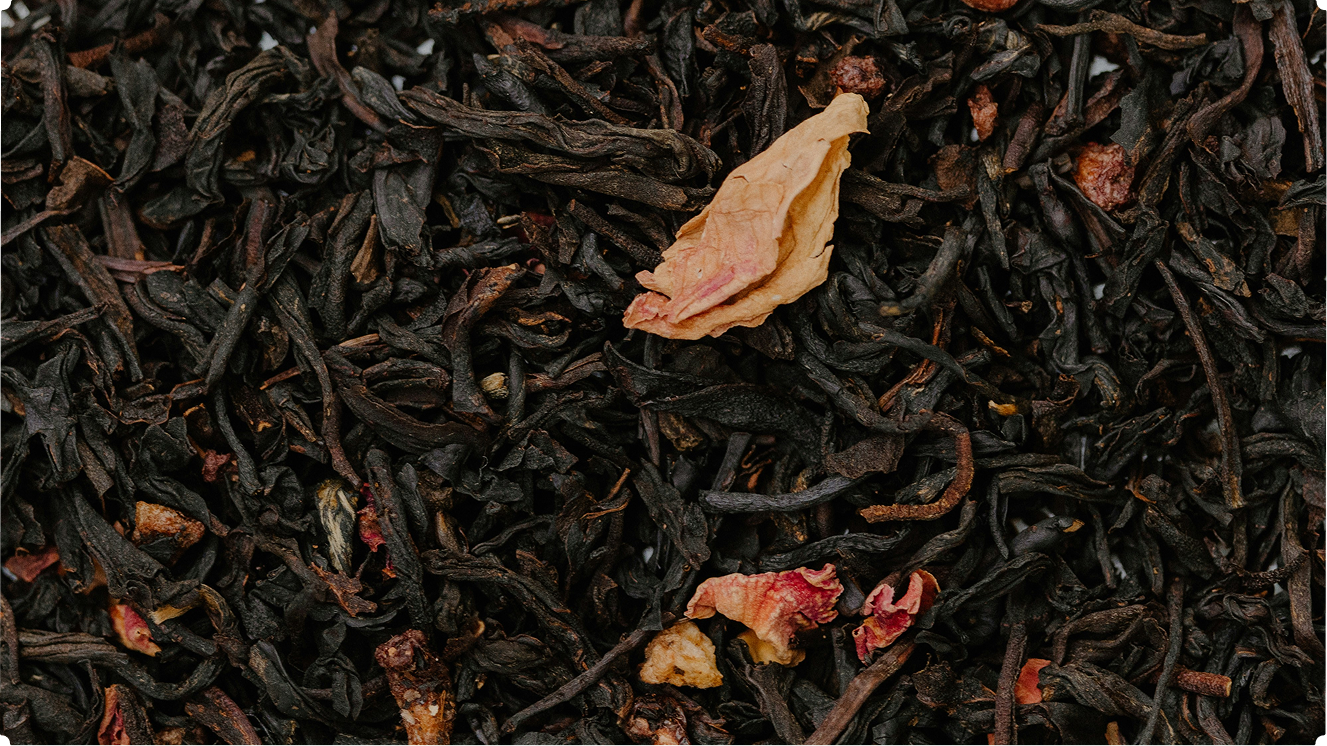
Before silver became the price of tea, tea itself was money, pressed into bricks, traded for goods, wages and even horses across Asia.
Long before tea became a global commodity, it already operated as infrastructure: a drink, a currency, a trade good and a political instrument.
Its history in Asia shows how something ordinary can become embedded in systems of exchange, survival and state power.
The bureau
The plant came from the mountains where Yunnan, Sichuan and northern Burma meet. Legend gives the discovery to the emperor Shennong somewhere around 2737 BC, which is a nice story and not evidence. What is documented is that by the Tang dynasty tea had moved from medicine to daily drink, that Lu Yu wrote the Cha Jing around 760 AD, and that Buddhist monks carried it outward as an aid to staying awake through long meditation.
That first transmission was cultural rather than commercial. Tea reached Korea during the Silla period and Japan in the ninth century, brought back by monks returning from study in China. Eisai returned in 1191 with stone-ground powdered tea and wrote the first Japanese treatise on it. Everything that later became the tea ceremony descends from a monk's practical problem with sleep. The second transmission was strategic, and it is the one that matters here.
China had a horse problem. Its agricultural heartland could not breed cavalry mounts in the numbers required, and it faced nomadic powers whose entire military advantage was mounted. Tibet had horses and high pasture. Tibet also had a diet built on meat and dairy, in terrain where vegetables would not grow, and tea supplied something that diet lacked. Two shortages facing one another across a mountain range are the beginning of a trade route. It began informally under the Tang and was formalised under the Song, which established a Tea and Horse Bureau, the chamasi, in 1074 to run it. The bureau set the exchange rate. Roughly sixty kilograms of tea for one horse.
The volumes were not marginal. One study puts the Northern Song trade at more than twenty thousand warhorses a year. Of Sichuan's total annual tea output, at least half went to Tibet. The Yuan established their own bureau for the Tibetan tea trade; the Ming expanded the system further and the towns along the route grew on the back of it.
“Read plainly, that is a startling proposition. For several centuries the military capacity of the Chinese state rested on an agricultural product, and the cavalry was bought with a leaf.”
It was also understood as a political instrument rather than merely a commercial one. When the northern horse routes were cut in 1073, the Song court found itself paying in silver and silk as well as tea, and using the trade deliberately to manage relations with the tribes of the northwest. Tea was leverage, and withholding it was policy.
What the road carried
The route that carried it was not one road but a shifting network, and it ran for something like thirteen centuries. The Sichuan branch went from Ya'an, over four thousand kilometres, through Kangding and Batang and Chamdo, and eventually to Lhasa. The Yunnan branch started in the tea mountains of Pu'er. Both took between three and six months. Both crossed terrain that killed people regularly. Beyond Lhasa the network continued into Nepal, Bhutan, Sikkim, Burma and India, and connected onward to markets further west.
Human porters carried loads that photographs from the early twentieth century make difficult to believe. Mules carried sixty to eighty kilograms apiece. Compression existed because of this. Loose leaf is mostly air and it does not survive a mountain crossing. Steaming the leaf, pounding it, pressing it into moulds and drying it hard produced something dense, durable and stackable that could be preserved more or less indefinitely. It is worth noting for later that the technique was invented to solve a transport problem.
Section Styles full-width
When Europe entered the tea economy, the story shifted from regional exchange to global imbalance, empire and speculation. What began as a practical commodity eventually became both an industrial product and a collectible asset, while the older culture of provenance, ageing and regional distinction continued alongside it.
The buyer who had nothing to sell
Europe arrives late in this story, and it arrives as a customer. The Portuguese encountered tea in China in the sixteenth century. The Dutch shipped it. By the seventeenth it had reached England, and by the eighteenth the British had developed an appetite for it that outran anything they could offer in exchange.
This is the part usually told as the beginning of tea's importance, when it is closer to the opposite: the moment a buyer arrived who wanted a great deal and had nothing the seller wanted. China would sell tea, silk and porcelain, and would take silver. The East India Company therefore bought silver in Europe and Mexico and shipped it east, and by the late eighteenth century the arithmetic had become unsustainable. Britain's trade balance with China went from positive in the early 1770s to a deficit of around a million pounds by the early 1790s, and worse from there. The Company carried enormous debt.
The instrument that closed the gap was opium, grown in Bengal, auctioned in Calcutta to independent traders who smuggled it into China, and sold for the silver that then bought the tea. Imports rose from a few hundred chests a year in 1729 to roughly ten thousand a year in the 1820s and around forty thousand by 1838. By 1839 opium sales were covering the entire cost of the British tea trade. When Lin Zexu confiscated and destroyed twenty thousand chests at Canton in 1839, Britain had its pretext. The first war ran to 1842 and ended with the Treaty of Nanking, treaty ports and the cession of Hong Kong. The second ran from 1856 to 1860, against Britain and France together.
One honest caveat, since the story is usually told with more confidence than the evidence supports. The scale of the silver outflow from China in the 1820s and 1840s, and how much of it opium actually caused, remains genuinely contested among economic historians. Some attribute it substantially to a contraction in the international silver supply rather than to the drug trade. The wars happened; the accounting behind them is still argued over. What followed was agricultural. A wild large-leaf variety was identified growing in Assam in the 1820s, and British planters used it, along with seed and knowledge extracted from China, to build plantation tea in India and Ceylon on indentured labour. Within a few decades the buyer had become a producer and China's monopoly was finished.
Four paragraphs is the correct amount of space for this. It is a consequential chapter, but it is not the story, being simply what happened when a foreign buyer walked into a trade that had already been running for a thousand years.
The brick becomes an asset
Compression, invented to get tea over a mountain, turned out to have a second property. Certain compressed teas, pu'er above all, change with age. Stored well, they keep. Stored well and long, they are held to improve.
“A thing that keeps, is scarce, is gradable and improves with holding is not only a drink. It is an asset, and Asia priced it as one.”
Between 1999 and 2007 the value of pu'er rose roughly tenfold. At the peak in mid-2007 the finest aged cake changed hands at around 150 US dollars a pound. The Fangcun market in Guangzhou operated as something close to an exchange, and by one account as much as ninety-five per cent of the tea traded there was bought to be stored rather than drunk. Between 2005 and 2006 the number of pu'er shops in China tripled. People bought land to plant trees.
The break came in June 2007. An earthquake in Yunnan should, on any reading of supply, have pushed prices up. Instead they fell, which revealed that the warehouses were full and the scarcity was manufactured. State television investigations found speculators had been hoarding. By the end of 2008 Reuters reported the tea had lost around eighty-five per cent of its value from the May 2007 peak, a worse fall than the Shanghai stock market managed over a comparable period. Farmers and small producers were ruined.
It was not the first such cycle. Hong Kong had one from the 1950s and Taiwan had one that broke in 1999, after which the speculative attention moved to the mainland. A technique developed to move a leaf across the Himalaya had become, a thousand years later, the basis of a collectible asset class with its own bubble, its own fraud and its own crash. Function turned into value, which is a sequence anyone who works with any agricultural product will recognise.
Where it actually is
Tea is now grown on every continent that will take it and drunk almost everywhere. It would be easy to read that as a story of successful export. The consumption figures say something else. China accounts for around forty-six per cent of the tea drunk in the world, roughly three million tonnes a year. India takes another eighteen per cent. Turkey drinks more per person than anywhere else, over three kilograms a year each. The market is, overwhelmingly, where it always was.
What travelled was a fraction, and the fraction that travelled took the form the traveller wanted: blended, bagged, priced as a commodity, drunk with milk. Meanwhile the older economy carried on without much reference to any of it. Single mountains and single years, storage as a discipline, cakes bought and held, the whole apparatus of vintage and provenance that the West believes it invented for wine.
“The bricks are still made, and they are still scored across the face so that a piece can be broken off.”
Section Styles full-width

Latest Perspectives

DRINK
The Flavours have Changed.
The Classics haven’t.
14 AUG 2026

DRINK
What are you supposed to drink
with all this?
20 AUG 2026
DRINK
The City Eats Late
2 SEP 2026