
PLACES
The City Eats Late
28 AUG 2026
Section Styles full-width
Section Styles full-width
WORDS
Michel Lu
SHARE
[social-icons]
Dinner ended hours ago and everyone swore they were finished. Then somebody says the most dangerous words in nightlife, and the best meal of the evening begins — the one nobody planned, on the suppers of Hong Kong, Bangkok, Tokyo, Seoul and Singapore.
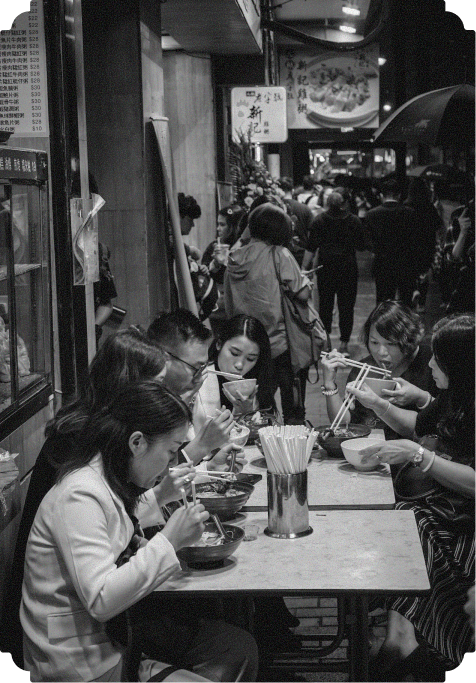
After midnight, the city loosens its rules and the best meals often happen in places nobody planned to visit. Across Asia, late-night eating turns plastic stools, neon streets and simple food into the backdrop for some of the night’s most memorable moments.
Two in the morning
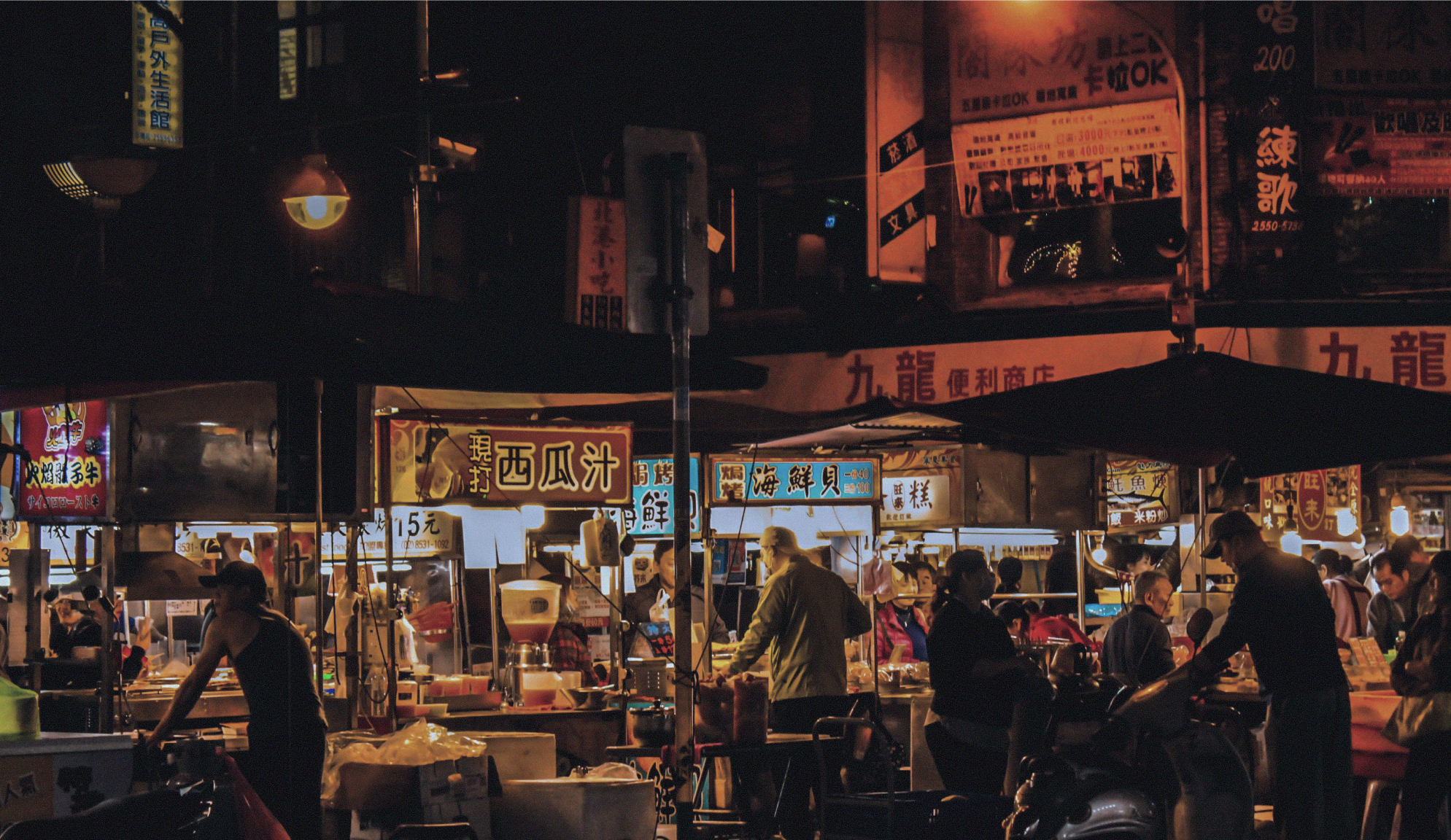
At two in the morning, a city smells different. The rain has settled into the pavement, turning the street black and glossy beneath the neon. Warm air rises from the drains. Kitchen vents breathe garlic, charcoal and frying oil into the night, where they mix with cigarette smoke, perfume, exhaust and the sweet, yeasty ghost of beer spilled repeatedly in approximately the same place. Taxi doors slam. A motorcycle tears a puddle in half. Somewhere behind a metal shutter, a wok hits flame with a roar you feel in your sternum.
This is also the hour when everyone becomes hungry again.
It does not matter that dinner ended four hours ago, or that at midnight several people swore they could not possibly eat another thing. Hunger after midnight operates according to different laws. It arrives suddenly and with absolute conviction, usually just after someone says the most dangerous words in nightlife: "I know a place."
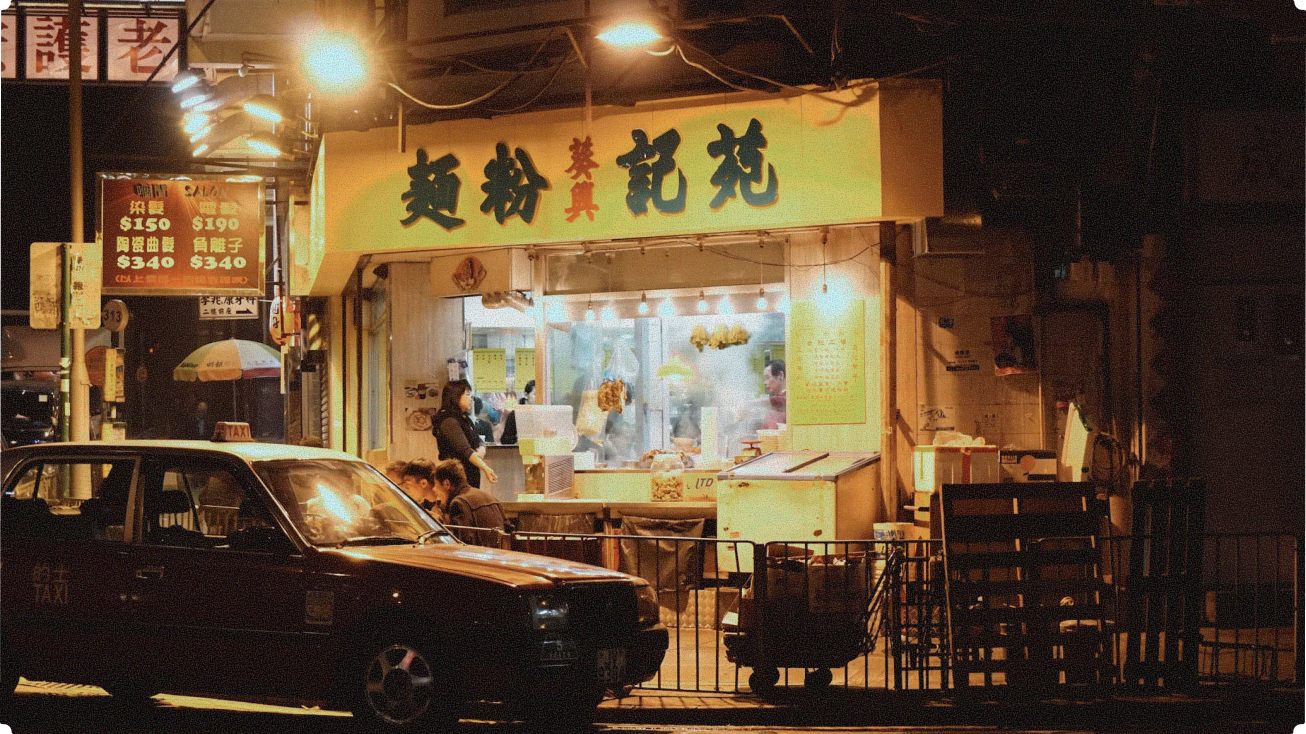
The place is never quite nearby. It is "just around the corner", a geographical description which, after several drinks, can encompass most of a city. Taxis are summoned. People disappear and reappear with other people nobody remembers inviting. Eventually you arrive in a narrow street where the awning drips rainwater down the back of your collar, the fluorescent lighting is unnecessarily severe, and a cook behind a fogged window is still moving with the calm, economical rhythm of somebody who has been doing this since before you began your evening. The plastic stool is slightly damp. It sticks to the backs of your knees. You do not care.
Then you notice the woman at the next table. She is beautifully dressed, in something dark and silky that probably should not be this close to a bowl of soup. Her nails are immaculate. A Cartier bracelet catches the fluorescent light when she reaches for her chopsticks; on the other wrist is an Audemars Piguet that might be worth more than the premises. Her handbag hangs from the back of a plastic chair by one strap, swaying slightly every time the kitchen door swings. In front of her: two bowls of noodles, a dish of chilli sauce, and a bottle of Dom Pérignon sweating in a plastic ice bucket.
“Nobody is looking at her. This is just supper.”
Elsewhere, luxury tends to require scenery. The wine needs the right dining room, the watch needs polished wood, the handbag expects upholstery and enough space between tables to suggest that nobody here has ever needed to squeeze past a motorcycle. After midnight in Hong Kong or Bangkok, all of that becomes wonderfully irrelevant. The person wearing the expensive watch gets the same wobbling stool as everyone else. Steam fogs the same glasses. Nobody is protected from garlic.
I spent years in nightlife, and it taught me that the meal after the night out was often the part people remembered. Nightclubs are elaborate machines for manufacturing spontaneity — guest lists, lighting cues, door policies, people whose entire job is to make several hundred strangers appear to have simply happened to arrive in the same room looking unusually good. I learned in the end to judge an evening not by the room but by how many people refused to go home afterwards.
The meal afterwards has no machinery at all. Someone you barely knew at midnight becomes a close friend over noodles at three. Jackets come off, ties loosen, makeup begins making independent decisions. The person who spent the evening being extremely glamorous is now eating roast meat with such concentration that conversation has become impossible. Someone insists they are not hungry while steadily removing food from everybody else's plates.
Three
Hong Kong may do this hour better than anywhere. On a wet night the city doubles itself: red characters, headlights and green taxis shimmer in the puddles while air-conditioning units drip a private rhythm onto pavements already slick with rain. The lanes behind the brighter streets feel narrower after midnight, and the smell changes every twenty metres — roast goose, incense, damp cardboard, frying garlic, the medicinal sweetness of herbal tea. Inside a cha chaan teng the fluorescent light is merciless; there is no flattering corner. One table holds two bankers still in dinner jackets, three restaurant staff finishing work, a young couple saying very little to each other, and someone in couture eating macaroni in broth with ham. Hong Kong has never been terribly bothered by contradiction.
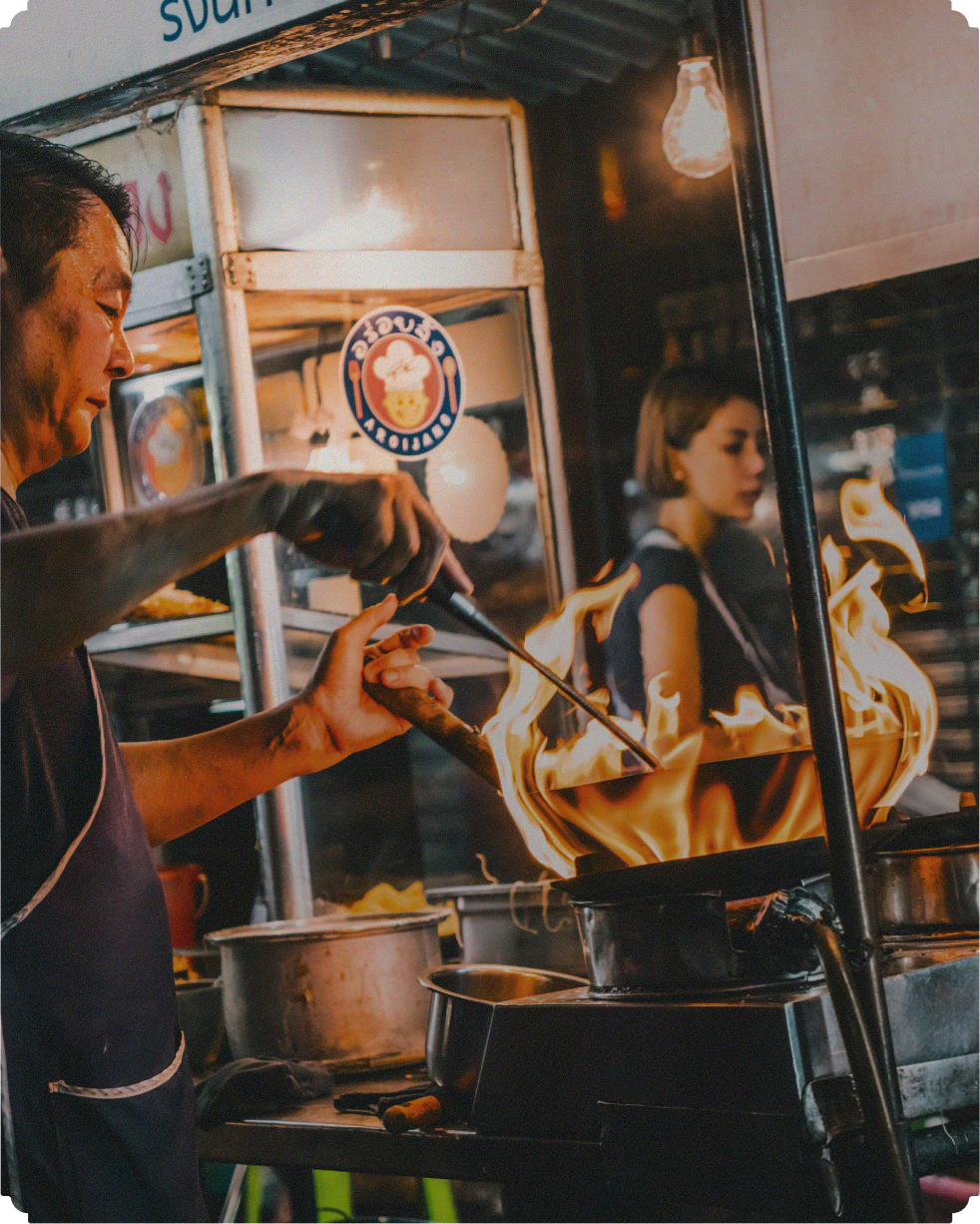
Neither has Bangkok. At two in the morning the heat still rises off the road, and after rain the asphalt shines like lacquer. Motorcycles squeeze through gaps that do not appear to exist. Plastic tables creep out onto the pavement. A dog sleeps beneath one with the confidence of a regular.
Then fish sauce hits a hot wok. The smell is immediate — salty, funky, slightly alarming — followed by garlic, chilli and smoke. Blue flame climbs the side of the pan. Noodles are thrown into the air. Ice rattles into metal buckets, and a bottle of something very expensive lands on a table covered with a plastic cloth printed with advertisements for beer. Nobody has brought appropriate glassware. The Champagne is drunk from small tumblers, the whisky poured over convenience-store ice. Nobody is performing reverence around the bottle. It has been invited to supper.
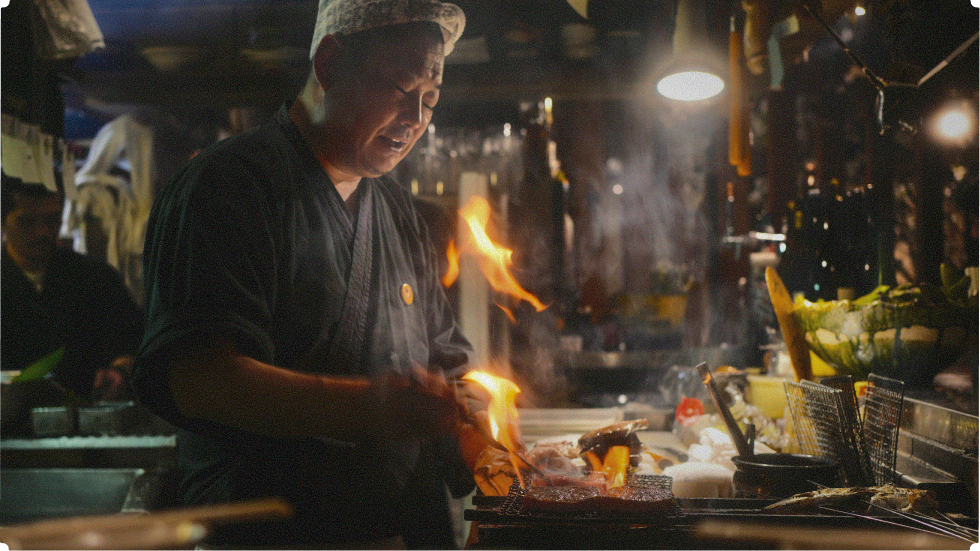
The night has versions everywhere. In Tokyo it glows amber behind an anonymous door or beneath the railway tracks, where yakitori smoke curls into the street and settles into coats and hair, and a cook turns skewers over charcoal until the chicken skin blisters and drips, and each drip flares. A cold beer, a highball, a few skewers, salty and hot and exactly right. Later comes ramen: the steam hits your face before you sit down, your glasses fog, and you eat the first mouthfuls half blind, turning the too-hot bowl by its rim, a quarter at a time.
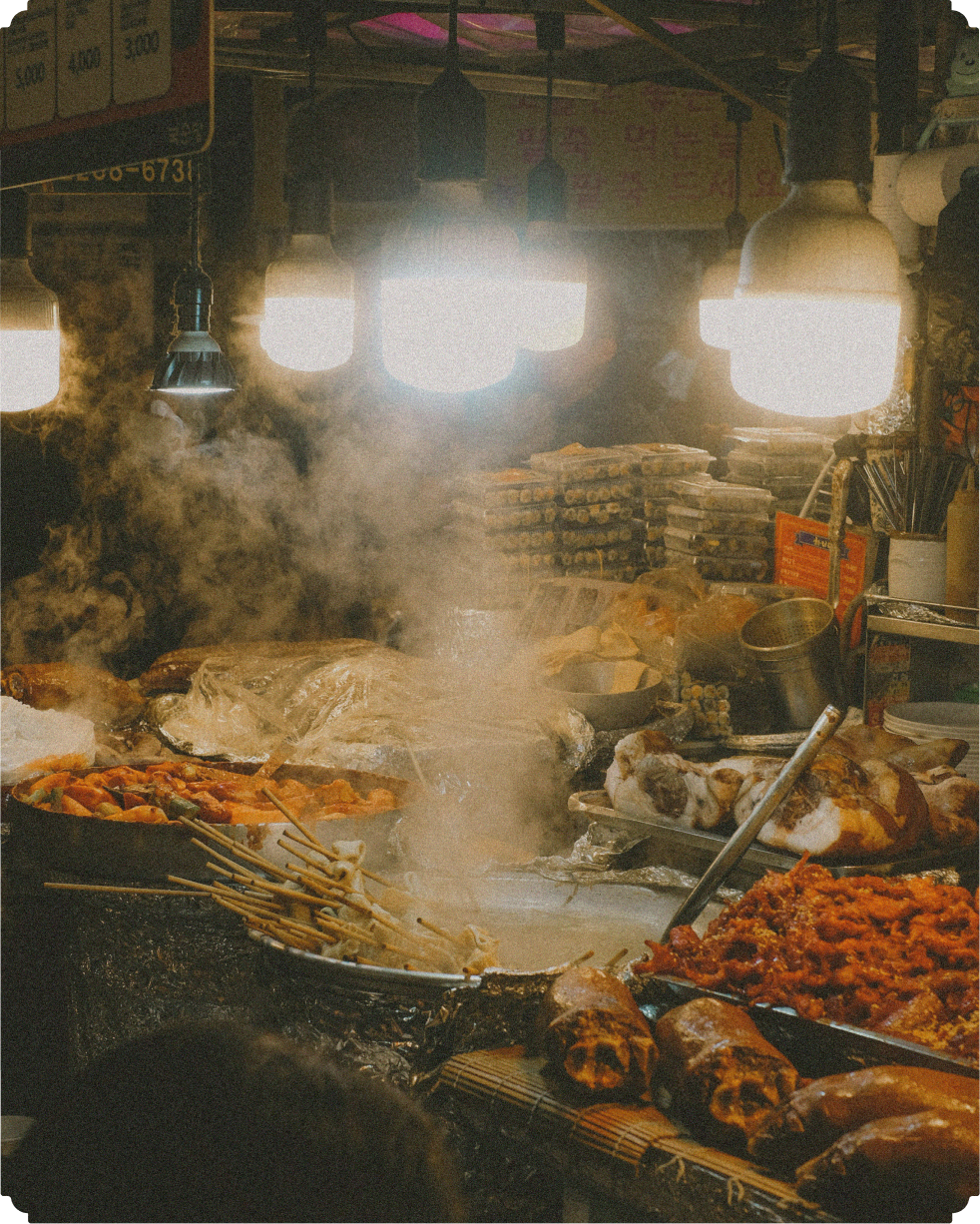
In Seoul the evening seems constitutionally incapable of ending. Restaurant windows are opaque with condensation, meat hisses on the tabletop grills, scissors appear, and soju bottles multiply at a rate nobody can adequately explain. Outside it may be freezing; inside everyone is pink from heat and alcohol, and a beautiful coat is thrown over a chair where it will absorb enough barbecue smoke to remain fragrant for days. Nobody cares. The fried chicken has arrived, lacquered sweet and hot, and after midnight, with cold beer, fried chicken begins to acquire medicinal properties.
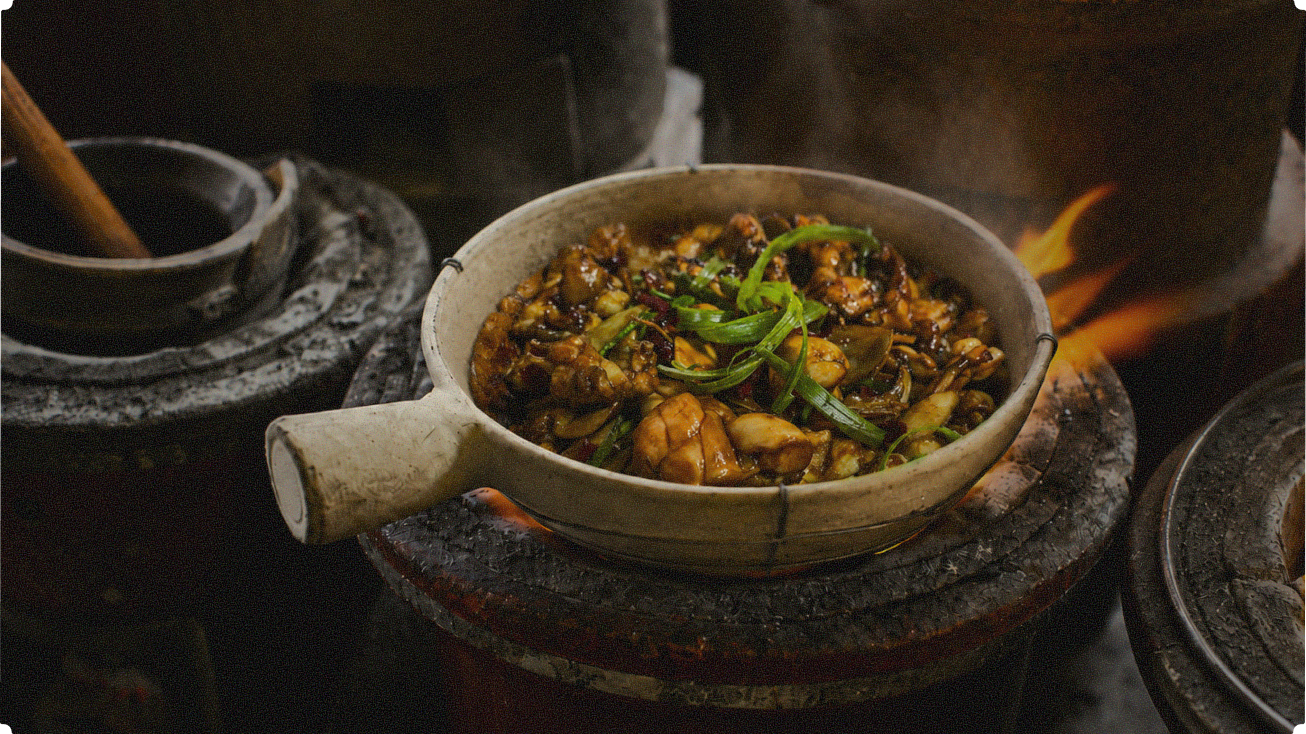
In Singapore it is prata at one in the morning, which makes perfect sense in a way prata at one in the afternoon somehow does not — the dough blistering crisp at the edges, the curry in its little metal dish, somebody ordering another before the first has disappeared. Peppery bak kut teh, steam rising into your face. Frog porridge still bubbling angrily in its claypot. Whatever survives the increasingly organised city and has chosen not to turn its lights off.
This matters more than it seems. Late-night food is part of the infrastructure of a city that lets people live on different clocks. Bartenders finish late. So do chefs, musicians, hotel workers, cleaners and taxi drivers; their midnight is somebody else's six o'clock. My own clubs did not close until five or six in the morning, and I confess I rarely lasted that long. Somewhere past three I would slip out of my own party to eat, which is how I learned where a city really eats — not from any guide, but from the places still glowing when everyone respectable had gone home.
A city can have thousands of restaurants and still feel dead at night. You leave a bar at one, step into immaculate streets, and find locked doors and the faint sense that the evening has been terminated by regulation. The best nocturnal cities leave loose edges. They permit bad planning. You can have one last drink and accidentally find yourself eating dumplings two hours later. You can decide the night is over and then change your mind.
“At three in the morning there are generally only two questions: is it open, and is the food good? Sometimes only the first one is essential.”
Alcohol creates optimism, and after several drinks it is easy to conclude that a restaurant's willingness to serve you is evidence of culinary greatness. It is not. Standards acquire flexibility — the chipped bowl becomes charming, the service merely needs to occur — and you find yourself saying "this is actually really good" with an emphasis on actually that would probably upset the owner. Sometimes it really is good. Sometimes it is simply exactly what you want at exactly the moment you want it, which may amount to the same thing.
Context seasons food more powerfully than critics like to admit. So does hunger. So does exhaustion. Most of all, so does company. A bowl of noodles eaten alone at lunchtime cannot be the same bowl eaten at three in the morning with six people who had no intention of having dinner together. Some of the most consequential conversations of my working life have happened over those bowls, at hours when nobody present was in any condition to take notes.
Section Styles full-width
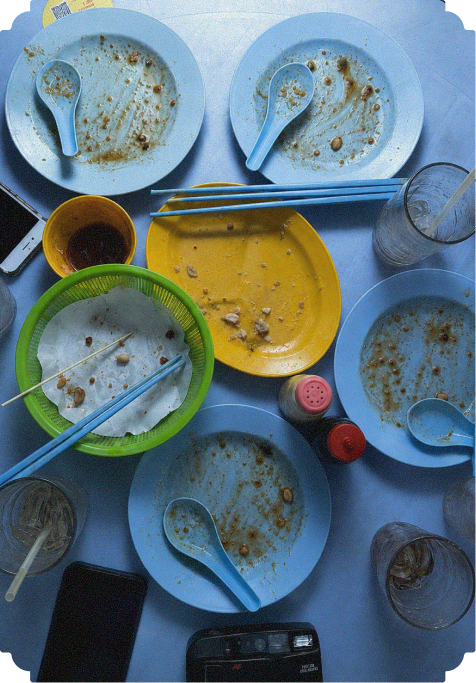
As the night wears on, everything becomes simpler: the drinks, the hospitality and the reasons for staying. What remains is the company, the food and the feeling that the best nights are often the ones that continue after the plan has ended.
A quarter past three
Drinks simplify with the hour. Earlier in the evening we were interested in cocktails; there were techniques to discuss, and someone photographed a garnish. Now it is cold beer, sake, soju, a highball, perhaps Champagne if somebody has been reckless enough to order one. A rare sake sits beside a plate of grilled offal and nobody finds this remarkable.
There is a point in every long night when complexity stops feeling sophisticated and begins to seem inconvenient. Nobody wants a garnish with a biography at 3.15am. The beer can come now. This is also when hospitality becomes strangely moving. Earlier, everything was polished — lighting, music, uniforms, glassware, all conspiring to create a world. Now the machinery shows. The waiter is tired. The chef has been cooking for ten hours. You are not looking particularly fresh yourself. Nobody is pretending this is the first table of the evening.
And yet the soup arrives hot. Someone brings another plate without being asked. The beer is cold. A cook who would quite reasonably prefer you to go home feeds you anyway.
Nearly six
Eventually the city begins to change again. The traffic thins. Chairs are stacked somewhere nearby. A shutter comes down with a metallic crash, and the music that had been playing unnoticed all night suddenly stops. Someone looks at their phone and makes a noise.
Outside, the rain has gone but the pavement is still wet. The neon is losing its argument with the dawn. Delivery vans pull against the kerbs, and a man in rubber boots hoses beer, cigarette ends and the remains of somebody else's evening towards the gutter. The first birds begin making an unreasonable amount of noise.
The woman who had been sitting beneath the neon sign steps onto the street in her beautiful dress and her expensive watch, her shoes now carried in one hand. Her hair smells faintly of the night. There is probably chilli oil somewhere it should not be. She looks completely content.
This is the dangerous moment when you realise it is no longer very late. It is early. Someone has a meeting in four hours. Somebody else insists they are fine. There are hugs of varying sincerity and promises to do this again soon, though everyone knows that this exact group of people will probably never sit around this exact table again.
Perhaps that is why these meals stay with us. The best nights are rarely the most perfectly organised ones. They are the nights when the plan runs out and the city takes over. A wet alley. A wooden stool. Steam rising beneath a neon sign. Something delicious in a chipped bowl. Something wonderful in your glass.
“And enough night left to have nowhere else you need to be. At least until breakfast. ”
Section Styles full-width

Latest Perspectives
DRINK
The Flavours have Changed.
The Classics haven’t.
14 AUG 2026

DRINK
What are you supposed to drink
with all this?
20 AUG 2026
DRINK
The City Eats Late
2 SEP 2026