
DRINK
The Flavours have Changed. The Classics haven't.
28 AUG 2026
Section Styles full-width
Section Styles full-width
WORDS
Michel Lu
SHARE
[social-icons]
Pandan is in the Daiquiri, miso is in the Old Fashioned, and every ambitious bar in the world now smells faintly of fermentation. So why do all the new drinks still have such old names?
I was sitting at a bar recently — the city doesn't matter, because this could have been any of a dozen — doing the thing I always do with a cocktail menu, which is to read it the way other people read novels. Slowly, with growing emotional involvement, and occasionally aloud.
The first page was the Classics. You know the sort. Martini. Manhattan. Negroni. Old Fashioned. Daiquiri. They sat there with the confidence of elderly gentlemen who have occupied the same table at the club for forty years and see no particular reason to move. I like most of them very much, and this is not an argument against the Martini. I have neither the courage nor the desire to pick that fight.
Then I turned the page, and suddenly we were somewhere else entirely. Pandan. Shiso. Yuzu. Black sesame. Hojicha. Shochu. Calamansi. One drink contained something fermented, another involved clarified coconut, and a third had apparently spent several hours communing with a centrifuge. I ordered the pandan one, because I am helpless before pandan, and it arrived cold and green-gold and smelling like my childhood had been distilled by somebody with a French technical education.
“There is something quietly funny in that. The leaf's first job was to make a cheap thing seem dear, and it has since become the dear thing itself.”
And that was when the thought arrived, somewhere between the second sip and the third: the flavours had travelled halfway around the world, but the drinks had somehow stayed at home. Pandan Daiquiri. Yuzu Martini. Miso Old Fashioned. Shiso Gimlet. Sesame Negroni. Asia is supplying an increasingly large part of the contemporary cocktail pantry, while the old canon still supplies all of the grammar. We have become extraordinarily adventurous about what we put into drinks and remarkably conservative about what we call them.
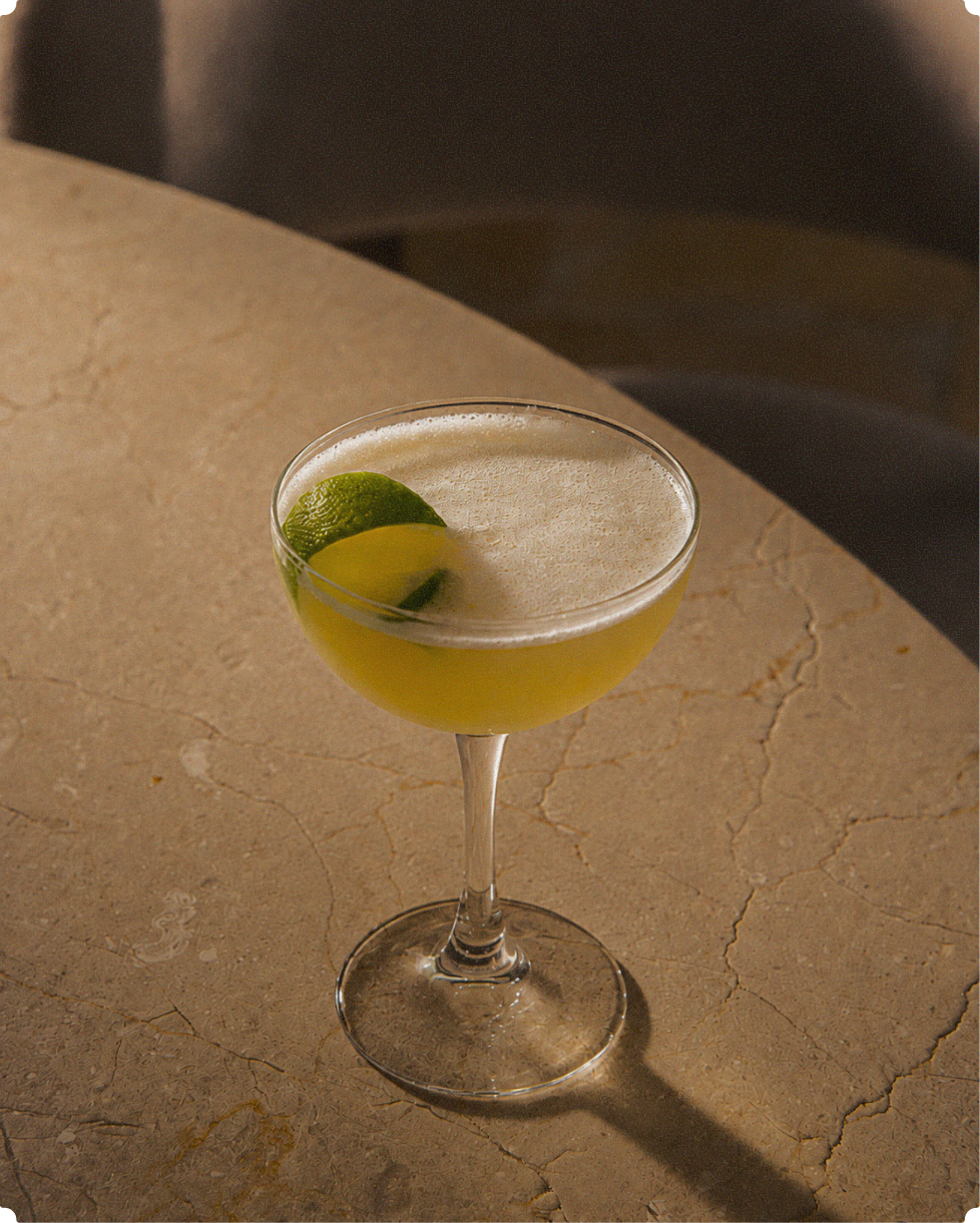
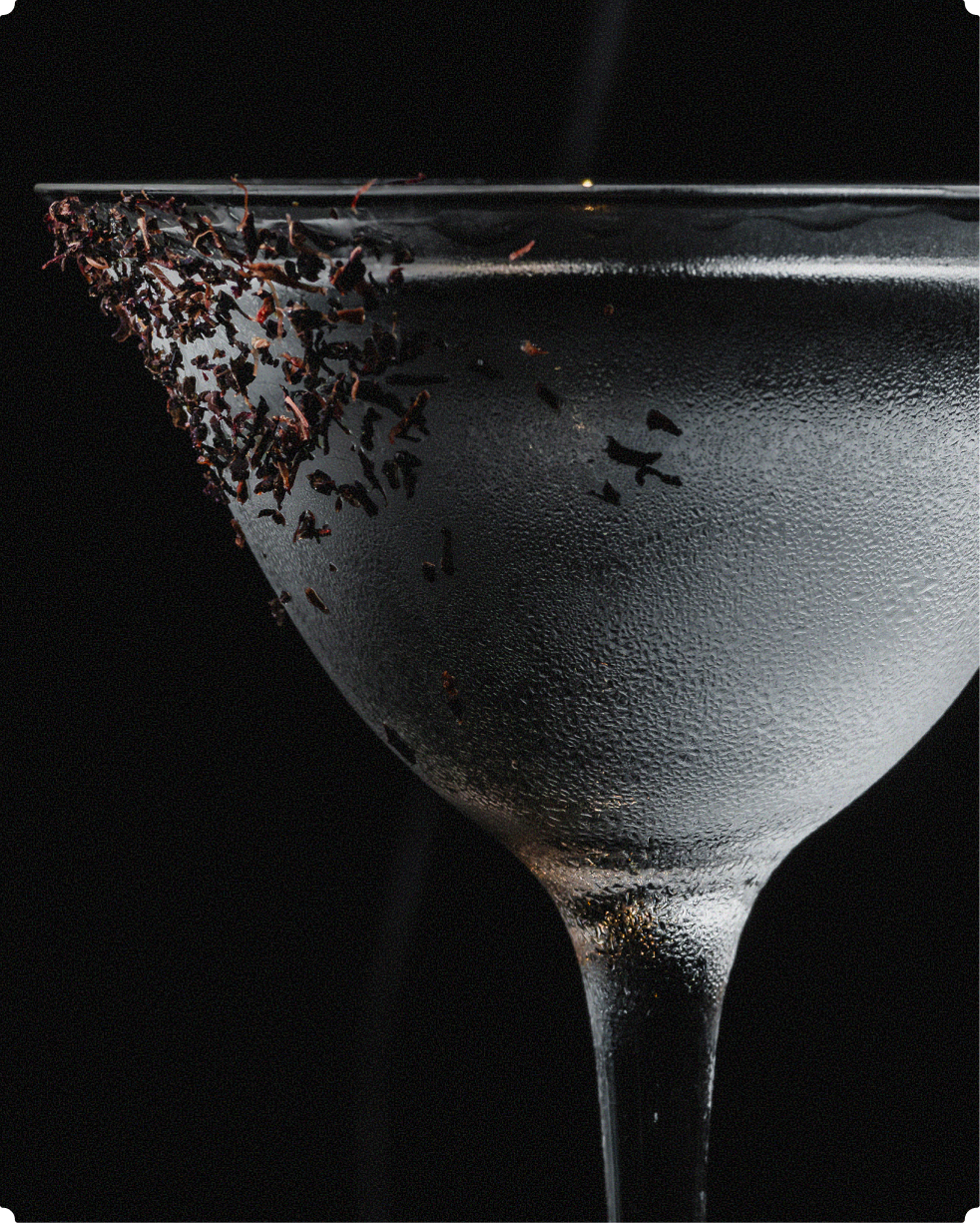
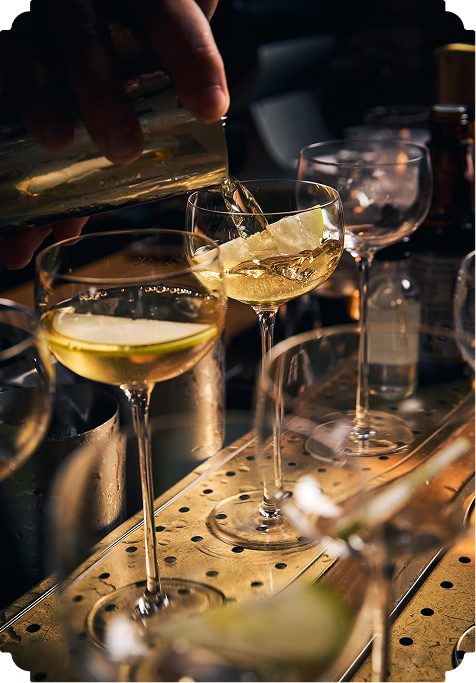
Asian ingredients are reshaping the modern cocktail pantry, even as many drinks still rely on the names and structures of an older Western canon. The next global classic may not look obviously Asian at all, but emerge from Asian bars with a form simple enough to travel, be copied and become its own tradition.
Food already did this
Not so long ago, unfamiliar cuisines were routinely introduced through comparison, like foreign dignitaries arriving with an interpreter. Ramen was explained as Japanese noodle soup. Kimchi was fermented Korean cabbage. Dosa became an Indian crêpe, bao an Asian bun, and anything involving raw fish was compared to sushi whether or not the comparison made any sense at all.
We seem to have got over most of this. Walk around London, New York, Singapore or Sydney and the vocabulary of Asian food has simply become part of the vocabulary of eating. People want ramen. They want omakase. They know the difference between dim sum and dumplings, even if they occasionally regret discovering how many dumplings it is possible to eat in one sitting. Matcha has escaped the tea bowl entirely and now appears in croissants, cookies and beverages of shades of green not normally encountered in nature. Nobody needs kimchi explained anymore.
This matters, because food did not become globally influential by supplying ingredients to Frenc cuisine. Japanese food did not conquer the world because somebody put miso into béchamel. Korean cooking did not become culturally important because chefs discovered that gochujang is very nice with roast chicken, although it is. Eventually entire culinary ideas travelled — the vocabulary, the grammar, the forms themselves — and then, most importantly, the explanation disappeared.
Cocktails are at an earlier stage of the same journey. The ingredients have thoroughly emigrated. Spend enough time reading ambitious bar menus and you might conclude that every bartender on earth has recently been given custody of a jar of miso. Yuzu is now so ubiquitous that calling it exotic seems faintly embarrassing. Baijiu, once approached by Western drinkers with the cautious expression of somebody examining an unexploded device, is turning up behind serious bars.
“Tea is everywhere. So is fermentation.”
And yet, after all this astonishing ingenuity — the clarifying, the fat-washing, the transformation of a tomato into something completely transparent — the result is almost always poured into a familiar shape and given a familiar surname.
The grammar problem
There is a practical reason. Cocktails have grammar, and bartenders learn families of drinks because families make an almost infinite subject comprehensible. The hugely influential Cocktail Codex reduced much of Western cocktail-making to six fundamental templates. It is an elegant system: once you understand the structure, you substitute. Change the spirit, change the acid, introduce pandan, and you have something new without having to invent the universe. Cooks do exactly the same, and purity, in either discipline, is mostly a fantasy.
But cocktails carry an additional burden, which is that their history has been codified unusually aggressively. There are books, lists, measurements, and organisations determining what constitutes a recognised classic. Bartenders discuss canonical drinks with the seriousness theologians once reserved for scripture, and exactly how much vermouth belongs in a Martini can still cause perfectly reasonable adults to become unpleasant.
The canon is genuinely useful — you can order a Negroni in Tokyo, Toronto or Turin and know roughly what will arrive, which is an extraordinary cultural achievement. But canons have a habit of making themselves look inevitable, and they rarely are. The Penicillin appeared in New York in the early 2000s. The Espresso Martini, despite now being consumed in quantities suggesting humanity has collectively decided sleep is optional, is a creation of the late twentieth century. At some point each of these stopped belonging to the bartender who created it. Other people made it, then customers ordered it, then somebody changed the proportions, and eventually the drink escaped.
“That may be the most useful definition of a classic: a cocktail that has successfully run away from home.”
The bird that got out
Now, honesty requires an admission here, because there is one drink that answers the question, and I have never much liked it.
The Jungle Bird was created on 6 July 1973 at the Aviary Bar of the old Kuala Lumpur Hilton, where a beverage manager named Jeffrey Ong Swee Teik needed a welcome drink for arriving guests: dark rum, Campari, pineapple, lime and sugar, served in a bird-shaped ceramic vessel, named for the actual aviary visible from the bar. It then did what classics do. It ran away. An American cocktail guide recorded it in 1989, a New York bartender changed the rum in 2010, and the modern version spread through the cocktail revival until it reached menus everywhere from Copenhagen to Cape Town. The original hotel was demolished, the bird-shaped vessels vanished, several people have claimed credit adjacent to its invention, and in 2024 the International Bartenders Association made it official. Every stage of the escape, exactly as the theory predicts. Malaysian bartenders speak of it, rightly, as the drink that put their country's cocktail culture on the world map.
My difficulty with it is not really the drink, although Campari and pineapple remain, to my palate, two guests who should have been seated at different tables. It is the route it took.
Look at how the bird got out. Born in an international hotel, poured for airline crews and expatriates, carried abroad by an American guidebook, revived in New York, and filed ever since under tiki — a fantasy of the tropics invented in California. It escaped by travelling entirely through Western infrastructure, and by being perfectly legible as a tropical drink for visitors. It is a genuine Asian classic, and it became one on somebody else's terms, half a century ago, in a bar built for people passing through.
Which sharpens the question considerably. It is not whether a drink born in Asia can become a global classic. One did. It is why it has happened only once, why it happened that way, and what the escape might look like now that it no longer needs to route through a Hilton lobby and an American paperback — now that the bars themselves are the destination.
The paradox of the rotovap
Part of the answer, I suspect, is that today's most ambitious cocktails are extremely difficult to steal. A great modern signature drink may involve a house-made ferment, a local botanical, a rotary evaporator, a clarified cordial, three days of preparation and something foraged from a mountain that closes to visitors every second Tuesday. This is wonderful if you are sitting in the bar that made it. It is less useful if you are a bartender in Manchester wondering whether you can reproduce it before service.
A signature benefits from being unique; a classic benefits from being copied. The Jungle Bird's five ingredients were its passport. The sophistication that has made contemporary Asian cocktail culture so thrilling may be precisely what keeps its drinks at home. Perhaps we should all be rather less precious about copying. In most creative industries imitation is treated with suspicion; in cocktail culture, being copied by enough good bartenders is the entire mechanism of immortality.
“Nobody owns the Martini anymore. Imagine trying.”
Not the Asian Martini
Whatever the next drink to make the journey turns out to be, I hope it is not called the Asian Martini, and I suspect it will not look Asian at all. We already made this mistake with food, assuming that a thing must display its cultural identity through a handful of recognisable symbols. Modern Asian cooking became more interesting when it stopped performing Asianness for somebody else's benefit, and cocktails deserve the same freedom. A drink created in Seoul does not need gochujang in order to be Korean. A Tokyo cocktail does not become more Japanese because somebody puts yuzu in it. Culture can live in technique, temperature, texture, ritual and hospitality — things much harder to point at than a garnish. The Jungle Bird, for all my reservations about it, gets one thing exactly right: it contains nothing recognisably Malaysian except its birthplace. Its Malaysianness is a fact, not a costume.
This is also why "where are the Asian classics?" is, in the end, slightly the wrong question. It treats Asian as a category that needs its own shelf, and Asia contains more than half the world's population; asking what an Asian cocktail tastes like is approximately as sensible as asking what European food tastes like. The goal is not an Asian canon. It is a genuinely global one, in which a drink invented in Bangkok can become a reference point in London, and a recipe that began in Singapore can appear in Melbourne without being introduced as Asian-inspired anything.
So here is what I find myself hoping for, somewhere around the bottom of the glass. Somewhere in Hong Kong or Taipei or Seoul, a bartender makes something with five ingredients and no explanation. Another bartender copies it. Someone changes the rum. Someone else gets the proportions wrong. A customer starts asking for it by name, the original menu disappears, the bar eventually closes, and nobody quite remembers who invented it, although several people will claim they do.
And one evening, on the other side of the world, somebody sits down and orders one. The bird got out once, through the lobby of a hotel built for other people. The next one can leave by the front door.
Section Styles full-width

Latest Perspectives
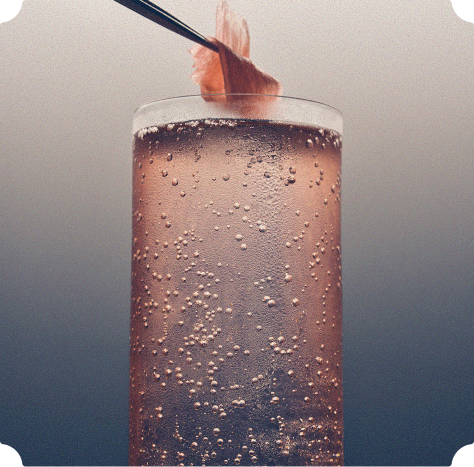
DRINK
The Flavours have Changed.
The Classics haven’t.
14 AUG 2026

DRINK
What are you supposed to drink
with all this?
20 AUG 2026
DRINK
The City Eats Late
2 SEP 2026