
CULTURE
Asia doesn't need another Louis Vuitton
28 AUG 2026
Section Styles full-width
Section Styles full-width
WORDS
Michel Lu
SHARE
[social-icons]
For a century, luxury meant Europe naming the object and Asia buying it, while frequently also making it. That arrangement is coming apart, and not in the way the industry keeps predicting.
For a long time, the relationship between Asia and luxury was relatively straightforward. Europe made the brands and Asia bought them. And, rather inconveniently for that neat version of the story, Asia often made quite a lot of the products too.
Indian artisans embroidered couture that appeared on Paris runways. Chinese factories manufactured increasingly sophisticated goods for international labels. Thailand became an important centre for jewellery production, and Japan supplied textiles and craftsmanship of almost obsessive quality. But the authorship — the name on the label, the story around the object, the provenance that justified the margin — usually belonged somewhere else. Paris. Milan. Geneva. London.
Luxury had geography built into it. A handbag acquired something by being French, a watch became more desirable for being Swiss, and a sports car arrived with Italian mythology before anyone had turned the key. Wine elevated the principle almost to religion: Bordeaux, Burgundy and Champagne were never merely places but systems for converting geography into value.
Asia, meanwhile, became extraordinarily good at consuming those stories. For decades, another European flagship opening in Shanghai, Singapore or Seoul was presented as evidence that Asia had arrived. A more interesting sign is that it no longer needs one.
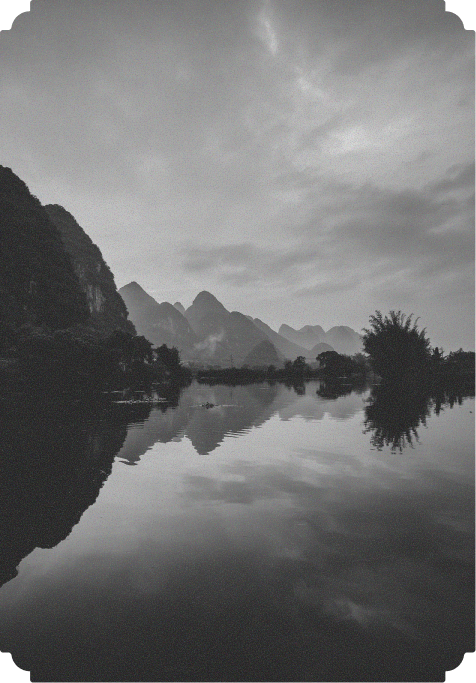
Asian luxury is no longer defined by how closely it follows European models, but by who gets to claim authorship over craft, design and cultural expression. Across India, China, Korea and Japan, value increasingly comes from confidence in a distinct point of view rather than borrowed prestige.
Who gets to put their name on it
India offers the clearest example of how the old hierarchy worked. The extraordinary embroidery, embellishment and handwork associated with European couture has long depended on Indian ateliers, yet the artisans were rarely visible to the person buying the finished dress. The labour was Indian; the authorship was European.
India did not suddenly learn how to make couture when Rahul Mishra became the first Indian designer invited onto the official Paris haute couture calendar in 2020. The skills were already there. What changed was whose name appeared at the end of the process. Mishra's work places Indian craft at the centre of the proposition, not as an invisible production service performed behind another house's identity but as the identity itself. Others have followed him onto the couture stage, while Sabyasachi has taken a different route, building a global business around Indian jewellery, textiles and decorative traditions without stripping away their origins to make them more palatable elsewhere.
“The distinction matters. India is no longer merely making luxury for somebody else. It is claiming authorship of the luxury it was always capable of making.”
The harder case
China presents a more dramatic version of the same story, because few labels have been harder to reposition than Made in China. For much of the late twentieth century those words were Western shorthand for efficiency, scale and low cost — almost the precise opposite of what a luxury label was supposed to communicate.
Now consider Laopu Gold. The Chinese jewellery house has built its appeal around 24-karat gold, traditional Chinese goldsmithing and a visual vocabulary that makes little effort to neutralise its origin. Dragons, gourds, Buddhist imagery and ancient gold-working techniques are not disguised beneath an internationally acceptable layer of minimalism; they are the point, and customers are paying luxury prices for them. For decades, conventional wisdom held that a Chinese luxury brand hoping to command serious prices would have to look less Chinese. Laopu has made almost exactly the opposite bet, and its expansion has made it a serious competitor to the international jewellery houses on their most important territory.
A younger generation of Chinese brands has taken a quieter route. Songmont makes leather bags whose cultural references can be subtle enough to miss: a curve recalling the roofline of a temple, a fastening derived from a traditional object, a collection drawing on Taoist ideas without turning the bag into costume. It feels contemporary first and Chinese second, or perhaps the distinction no longer matters.
ICICLE, founded in Shanghai in 1997, offers a third interpretation — natural materials, restrained clothing, meticulous fabrication and almost no dependence on obvious cultural symbolism. In April this year Kering, the French group behind Gucci, Saint Laurent and Bottega Veneta, took a minority stake in its parent company to support the brand's international growth. There is a pleasing inversion here. European luxury groups spent decades entering China in search of Chinese customers. Now one of Europe's largest is investing in a Chinese house to help take it to the world.
Exporting desire
Korea has approached the question from another direction entirely, and Gentle Monster is the demonstration. It sells eyewear, but describing it as an eyewear company misses most of the point. Walk into one of its stores and you may encounter enormous kinetic sculptures, strange creatures or industrial landscapes, in spaces that feel closer to contemporary art exhibitions than to places designed to sell sunglasses. This is retail treated as cultural production, and its parent company has extended the sensibility into fragrance through Tamburins and food through Nudake.
None of these businesses relies on traditional Korean imagery. They need no hanbok, celadon or calligraphy to prove their Koreanness, because the cultural specificity lies elsewhere: in the theatricality, the obsessive visual direction, the collapse of boundaries between retail, entertainment and art, and the understanding that a shop can be somewhere people visit with no intention of buying anything.
“Korea has not merely become good at exporting products. It has become remarkably good at exporting desire.”
The precedent
There is a danger in discussing the arrival of Asian luxury as though Japan had not spent decades dismantling the premise. When Rei Kawakubo, Yohji Yamamoto and Issey Miyake established themselves internationally, they did not succeed by producing Japanese versions of French fashion. They altered what Paris itself considered fashion to be. Japan is less a participant in this story than its most obvious precedent.
Today's Japanese examples are quieter. Auralee, founded in Tokyo by Ryota Iwai, has built an international following on fabric, colour and apparently simple clothes whose complexity resides in things most people cannot immediately see. There is no monogram to announce the price. The value is buried in Japanese textile mills, specialist fibres, dyeing processes and the accumulated knowledge of people who know how to make something extremely well. The provenance does not need to be printed across the chest. It is in the cloth.
Grand Seiko makes the same argument in a harder category, because few luxury industries are as geographically entrenched as watches and Switzerland still dominates the upper end to an extraordinary degree. Grand Seiko has become arguably the most credible challenger from outside it, and it did not achieve that by pretending its watches came from somewhere near Geneva. Its movements, finishing and design language are deliberately Japanese; Spring Drive belongs to a technical vocabulary it developed for itself; the names of individual watches refer to Japanese landscapes, seasons, snow and light. Japan did not ask permission to make a luxury watch. It made a Japanese one.
Section Styles full-width
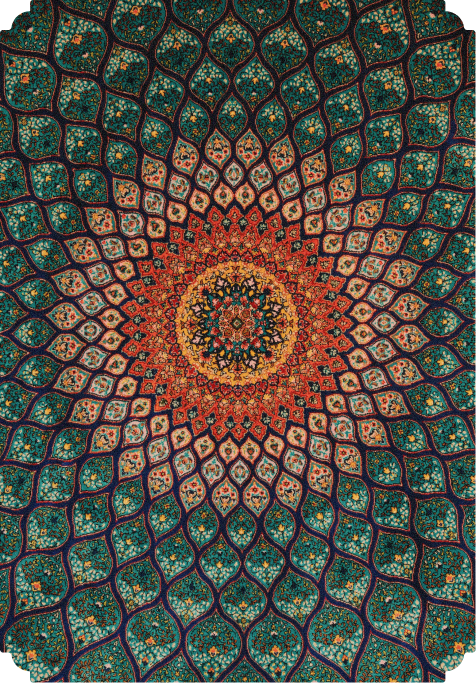
As luxury shifts toward provenance, originality and place, Asian origin becomes part of the value rather than something to disguise. The strongest brands are not reproducing European luxury, but building desire around what could only have come from their own geography, materials and culture.
Terroir travels east
And then there is wine, the luxury most obsessed with provenance. A handbag factory can move and a watch workshop can move, but a vineyard cannot be relocated without changing what ends up in the bottle. For centuries, certain European place names have performed an extraordinary economic trick on the strength of that fact. The word on the label can be worth almost as much as what is inside it.
Which makes Ao Yun particularly interesting. Moët Hennessy spent years searching China for a site capable of producing an ambitious fine wine before settling on vineyards high in Yunnan, near the Himalayan foothills. The first vintage was not introduced as an inexpensive Chinese curiosity. It arrived at around three hundred dollars a bottle, presented from the outset as a serious wine, and in 2016 it became the first Chinese wine to trade on Liv-ex, the international secondary market. The significance was not that China had produced an expensive bottle. It was that being produced in China was part of the reason it was expensive. Ao Yun could hardly separate itself from Yunnan if it wanted to; the altitude, the villages and the soils are the proposition. Made in China had travelled almost the full distance from manufacturing disclosure to terroir.
The Philippines offers an equally literal expression. Jewelmer, founded in 1979, built its high-jewellery identity around the golden South Sea pearl cultivated in Philippine waters — not jewellery merely assembled in the Philippines, but an object the environment itself participates in making, dependent on particular oysters, clean seas and years of cultivation that cannot be relocated to a cheaper industrial park. For most of luxury's history, precious materials travelled away from their origins before acquiring their greatest value beneath somebody else's name. Jewelmer reverses the relationship.
“The place that produces the jewel also gets to tell its story.”
The wrong question
For years the luxury industry has liked asking some variation of the same question. When will China produce its Louis Vuitton? When will Korea produce its Chanel? When will India create its Hermès? These are the wrong questions. Gentle Monster is interesting precisely because it does not behave much like Louis Vuitton. Laopu Gold does not need to become Cartier, Auralee does not need to become Armani, Grand Seiko does not need to become Rolex and Ao Yun does not need to become Château Margaux. The breakthrough occurs when Asian luxury stops being measured by how successfully it reproduces European luxury.
None of which makes European luxury less relevant. A great Burgundy remains a great Burgundy, and Hermès does not stop being Hermès because a Chinese customer decides she also wants Songmont. This is not a transfer of ownership. It is an expansion of authorship. The timing is favourable, because luxury itself is changing. Status still matters and logos have not disappeared, but consumers increasingly seek other forms of value: craftsmanship, cultural relevance, originality, rarity, provenance, the sense that something represents a point of view rather than simply a price. A century of history remains useful. It is no longer the only way to create legitimacy.
Nor does confidence require every Asian brand to advertise its Asianness — which may be the most important development of all. Sometimes the cultural connection is explicit, as with Laopu. Sometimes it sits in materials and manufacturing, as with Auralee, or in geography, as with Ao Yun, or in the entire behaviour of a company, as with Gentle Monster. There is no single Asian luxury aesthetic because there is no single Asia. Tokyo is not Seoul, Seoul is not Shanghai, and Mumbai is not Manila. What they increasingly share is something simpler: they do not need Europe to translate value on their behalf.
For much of the last century, the words Made in Asia told the customer where something had been manufactured, and they appeared discreetly, preferably somewhere underneath. The next generation of Asian luxury is making a rather different proposition. The place something comes from can determine the material, the craft, the philosophy, the technology, sometimes whether the object can exist at all. Origin is no longer something to overcome. Increasingly, it is the reason to want the thing.
“Asia doesn't need another Louis Vuitton. It needs more things that could only have come from Asia.”
Section Styles full-width

Latest Perspectives
DRINK
The Flavours have Changed.
The Classics haven’t.
14 AUG 2026

DRINK
What are you supposed to drink
with all this?
20 AUG 2026
DRINK
The City Eats Late
2 SEP 2026