
FOOD
Fifty Cents a Bunch
28 AUG 2026
Section Styles full-width
Section Styles full-width
WORDS
Michel Lu
SHARE
[social-icons]
Pandan costs about fifty cents a bunch in a Singapore wet market. The same leaf, distilled in Dijon, sells for thirty-five dollars a bottle. The interesting question is not who discovered it.
In a wet market in Singapore, pandan sits in bundles at around fifty cents each, neither displayed nor labelled, stacked near the door with the other things everybody buys without thinking. If you look as though you know what you are doing, nobody will ask whether you need help. In Dijon, the same leaf goes into a bottle that retails at roughly thirty-five US dollars. Both prices are correct, and the distance between them is the subject.
Pandan’s value changes not with the leaf itself, but with the context, craft and story built around it. What costs almost nothing in a wet market can become a premium product once distillation, branding and distance reshape how it is perceived.
The leaf
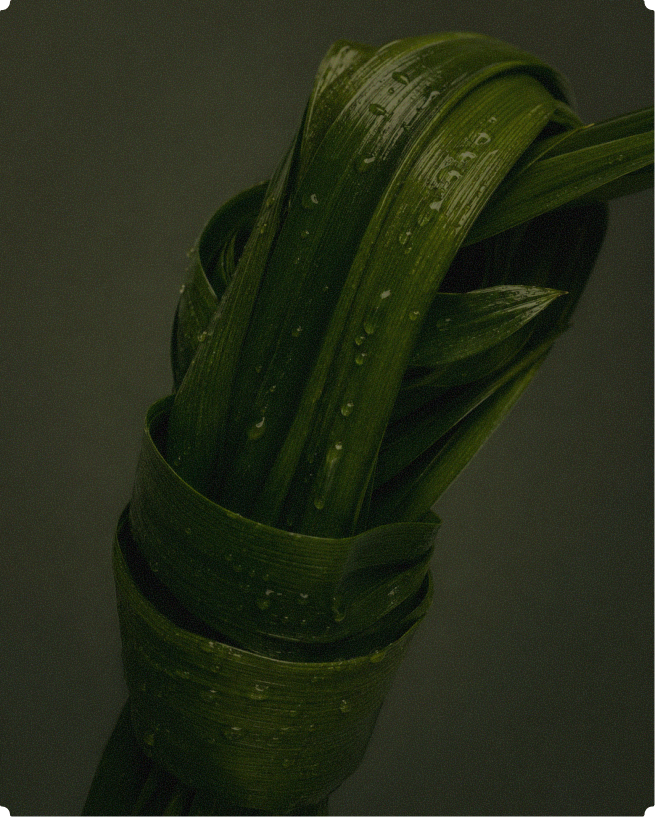
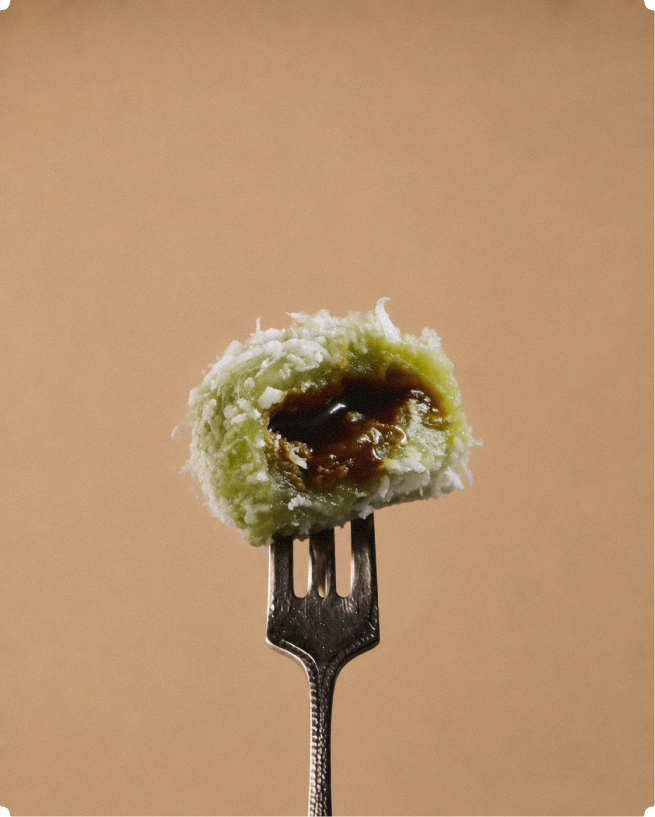
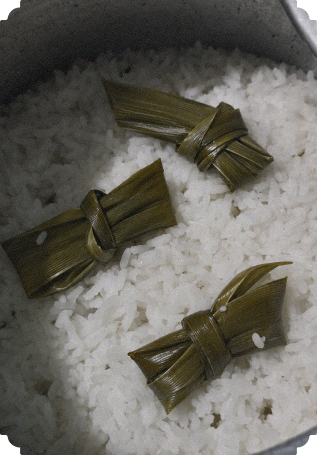
Pandanus amaryllifolius has been cultivated across Southeast Asia for generations. The long leaves are knotted and dropped into rice, bruised into coconut milk, cooked with a dish and then thrown away. They perfume kaya, nasi lemak, chiffon cake, ondeh-ondeh and most of the kuih anyone in the region grew up on. It is usually introduced elsewhere as the vanilla of Asia, which is a convenient handle and not much of a description. Pandan is floral and grassy but also nutty, buttery and oddly cereal-like. Toasted rice. Fresh bread. Popcorn. Biscuits.
Some of that confusion has chemistry behind it. One of pandan's characteristic aroma compounds is 2-acetyl-1-pyrroline, the same compound that gives basmati and jasmine rice their scent and that turns up in freshly baked bread. Anyone who smells toasted rice in pandan is not imagining it.
Which explains the oldest use of the leaf, and makes it look less like seasoning and more like
economics. Fragrant rice costs more than plain rice, and always has. A few pandan leaves knotted into the pot make ordinary rice smell like the expensive kind, because they are supplying the identical compound. The technique is centuries old and it is doing exactly what a technique should do, which is get you the result without the price.
“There is something quietly funny in that. The leaf's first job was to make a cheap thing seem dear, and it has since become the dear thing itself.”
None of the comparisons quite arrive, however. Pandan tastes like pandan, and the reaching for vanilla says rather more about the person doing the reaching than it does about the leaf.
The return
The more interesting movement is the one going the other way, and it has been building for a while. Southeast Asian bakers in London and New York have built businesses on the flavours they grew up with. Singapore distillers have put pandan into gin. Restaurants across the region have moved it out of dessert and into stock, cure and cocktail.
And Distillius now makes Super Pandan in Singapore, under its Epique Liqueurs range, using locally sourced pandan and the same French methods that produced the Dijon bottle. Seven hundred millilitres, twenty per cent alcohol, sixty-eight Singapore dollars. The distillery is on Pandan Loop.
What French means here
Both bottles describe their methods as French, which is worth stopping on. Technically the word is doing very little. Steeping botanicals in neutral spirit and redistilling the result is not a French invention and never was, and the apparatus is Arabic enough to still carry the name: alembic from al-anbiq, alcohol from al-kuhl. The chemistry was largely worked out across the Islamic world and arrived in Europe through translation, several centuries before anyone in Burgundy was bottling anything.
What is genuinely French is narrower and more interesting. A set of conventions about sweetness, clarity and balance. A regulatory tradition that fixed sugar levels and named categories. And the house model itself, in which a regional fruit becomes a bottled product with a reputation attached to it. Crème de cassis is French in a way that maceration is not.
So French technique, printed on a bottle of pandan liqueur, is doing much the same work that distance does. It attaches a claim about lineage to a process that has no nationality, and it is worth whatever the buyer believes it is worth. Distillius is the more honest case, though not because of the phrase. It does not have French methods so much as a French distiller: a person, in Singapore, doing the work. That is both a more defensible sentence than the marketing one and a more interesting fact, because the technique did not travel. Someone did.
That last figure does not do what you might expect. Super Pandan is not cheaper than the bottle from Dijon. Taxed and on a Singapore shelf, it is dearer, because duty on spirits here overwhelms any advantage from standing next to the field.
So proximity does not close the gap between fifty cents and the shelf price, and nothing else will either. What changes is who holds it. The distillation, the brand, the margin and the decisions all sit in the same city as the market that has been selling the leaf by the bunch the whole time.
“None of that happened because the West took an interest. Much of it predates the interest entirely.”
But something does change at home when an ordinary thing becomes valuable abroad, and it is not only economic. Familiarity makes an ingredient invisible. Fifty cents a bunch is not a price you interrogate. When the same leaf turns up in a bottle with a story attached and a price to match, the people who grew up with it tend to look at it again, and occasionally decide they should be the ones doing the bottling.
That second look is the useful part of the whole cycle, rather than the recognition, which is pleasant enough and largely beside the point.
The leaf
Pandan is still fifty cents a bunch.
It will stay fifty cents a bunch, because a market that has sold it that way for decades is not going to reprice on the strength of what a bar in Paris is charging. The two prices will simply continue in parallel, as they do for every ingredient this has happened to, and the gap between them will keep being described as discovery by people standing at the expensive end of it.
“Somebody is knotting a few leaves into a pot of rice right now without giving it a thought. That is not a lesser relationship with the ingredient. It is the one the ingredient was for.”
Section Styles full-width

Latest Perspectives
DRINK
The Flavours have Changed.
The Classics haven’t.
14 AUG 2026

DRINK
What are you supposed to drink
with all this?
20 AUG 2026
DRINK
The City Eats Late
2 SEP 2026